





Why people are rejecting AI-generated designs, and what brands should do instead
In short
People do not reject AI because it is new. They reject it when it replaces real people and real products, looks generic, or is not disclosed. Surveys in 2026 show half of US consumers prefer brands that avoid generative AI in customer-facing content, and most can spot it. Brands that use AI for drafts and clean-up, and put real photography and real faces in front, keep the trust.
We get asked about this almost every week now. A client sends a beautiful AI-made poster and asks, "Will people like it?" The honest answer is that many will scroll past, and some will think less of the brand. Here is what the research says, why it happens, and what we suggest instead.
What the numbers say
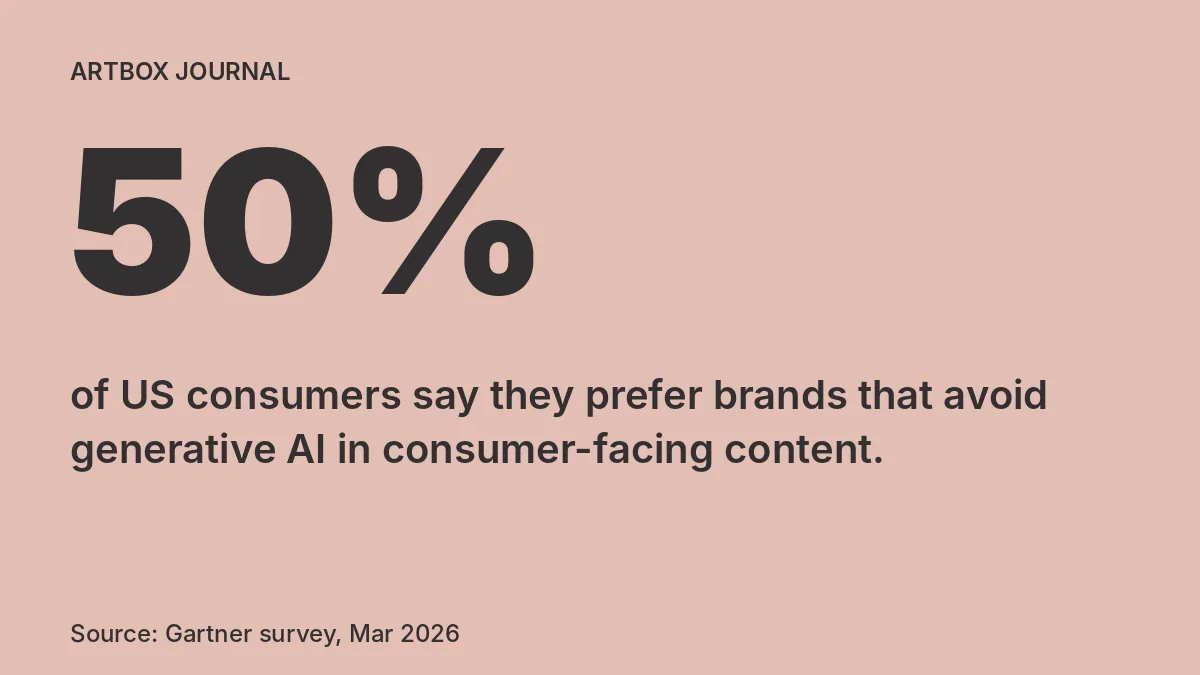
Gartner surveyed 1,539 US consumers and found that half would rather give their business to brands that avoid generative AI in consumer-facing messages, advertising and content. Its later survey found 49% say GenAI has made content quality worse, and 57% among younger consumers.
The 2026 Bentley-Gallup survey found that 79% of Americans had seen ads in the past 30 days that looked AI-made, and 73% of 18 to 29 year olds said it is unacceptable to use AI to create people or voices in ads. These are mostly US numbers. We have not seen a comparable Indian study, so use them as a signal, not a promise.
Why people react this way
- It feels empty. Canva's 2026 report found 70% of consumers say they can usually spot an AI-made ad because it feels like it is missing its soul.
- It looks like cost-cutting. Rival Technologies' research on Gen Z found people connected AI marketing with job losses, unpaid artists and companies cutting corners.
- It cannot be trusted to match the product. Baymard found 60% of shoppers would be less confident to buy if they knew product images were AI-generated.
- Real feels safer. A March 2026 Bazaarvoice survey found 83% of shoppers trust a "messy" customer photo over a professional studio shot.
The backlash is measurable
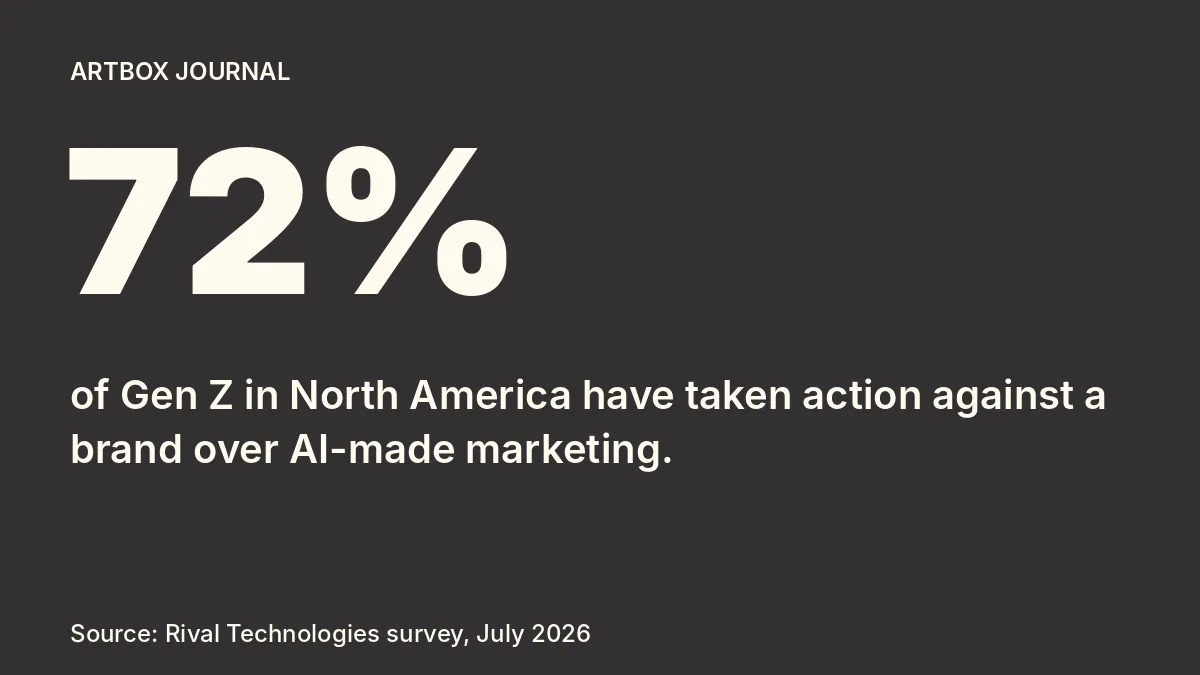
In the same Rival survey of 901 Gen Z consumers in the US and Canada, 72% had taken action against a brand because of AI-made marketing. That includes unfollowing, unsubscribing, complaining and walking away from a purchase.
Big brands have felt it. Nielsen Norman Group describes public backlash to AI holiday ads from Coca-Cola and McDonald's, and McDonald's Netherlands removed its AI ad after viewers reacted badly. A small brand has less goodwill to lose.
Where AI is still welcome
The same research shows the line is not "AI bad". The IAB found a gap: 82% of ad executives think Gen Z and millennials feel positive about AI ads, but only 45% of consumers do. People accept AI that works for them, such as search, shopping help and brainstorming. They push back when AI replaces the human face of the brand. Instagram draws a similar line: AI used for editing, captions or graphics needs no label, but an AI-generated person does.
What brands should do instead
- Photograph the real product. Use AI to clean a background, never to invent how a fabric, stone or finish looks.
- Put a real person in the frame. The founder, the karigar, a customer. See our founder-led content guide.
- Use customer photos and reviews. Our UGC guide shows how to collect them.
- Keep AI for drafts. Ideas, caption options, resizing. A human designer and editor finish the work.
- Disclose when it matters. If a person, voice or scene is synthetic, say so in the caption.
- Keep a house style. Consistent colours, type and layouts make a feed recognisable. Test readability with our colour contrast checker.
This is the rule we suggest to clients, and it is why our content and shoots start with a real shot list. If you want a feed that looks like your brand and not like everyone else's, send us a quick enquiry.
Frequently asked questions
Do people really dislike AI-generated designs?
Many do, especially when AI replaces real people or products or is not disclosed. Gartner found 50% of US consumers prefer brands that avoid generative AI in consumer-facing content, and Baymard found 60% of shoppers would be less confident buying if product images were AI-generated.
Can I still use AI for social media content?
Yes, behind the scenes: ideas, caption drafts, resizing and background clean-up. Put real photography and real people in front, and have a human review everything.
Should I tell people when I use AI?
If a person, voice or scene is synthetic, yes. Disclosure builds trust, and platforms such as Instagram now limit the reach of unlabelled AI-generated profiles. Editing or caption help does not need a label.
Is AI design bad for my brand?
Not by itself. It hurts when it looks generic, misleads people about the product, or replaces the human face of the brand. A consistent house style with real photography avoids all three.
Sources
- Gartner press release, 16 March 2026
- Gartner press release, 9 June 2026
- Bentley-Gallup 2026 survey
- MarTech: Canva state of marketing and AI 2026
- Advertising Week: Rival Technologies on Gen Z
- eMarketer: Young consumers push back against AI-made ads
- PetaPixel: Baymard study on AI product images
- Bazaarvoice: authentic holiday content
- Nielsen Norman Group: AI ads
- Business Insider via AOL: AI advertising controversies
- IAB: The AI ad gap widens
Statistics are from the sources above and were checked on 26 November 2026. Most are US surveys.
Tell us about your brand on WhatsApp and we will plan real, on-brand content.